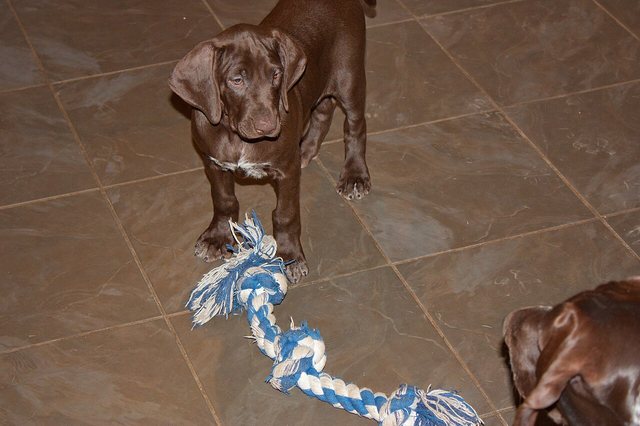
Watch ordinary play
Notice stiffening, hovering, blocking and one dog repeatedly taking items. Avoid forcing dogs to share a toy to prove that they get along.
Separate valuable items
Offer chews and food-filled toys in separate suitable areas. Collect leftovers before reuniting dogs if the items are likely to cause conflict.
Control human handling
Do not have children retrieve a guarded object. Trade or recovery exercises need an appropriate training plan; punishment can make handling less safe.
Review with support
Seek qualified behavioural advice for guarding or repeated conflict. Keep management in place while working on the cause rather than testing the dogs with the same item.
List which items each dog guards or seeks out most, then decide where those items can be used safely. Check barriers before distributing them and allow enough space for each animal to finish undisturbed. Avoid reaching between dogs during a disagreement. Ask a qualified professional for a handling plan if conflict develops.
Keep it practical
Your checklist
- Observe access
- Separate valuable toys
- Keep children away from conflict
- Seek qualified advice
Sources & further reading
Sources offer further context; a link is not an endorsement of this publication. This guide is general information and does not replace care from a vet familiar with your animal.
See our editorial policy and commercial disclosure. Please tell us about an error.