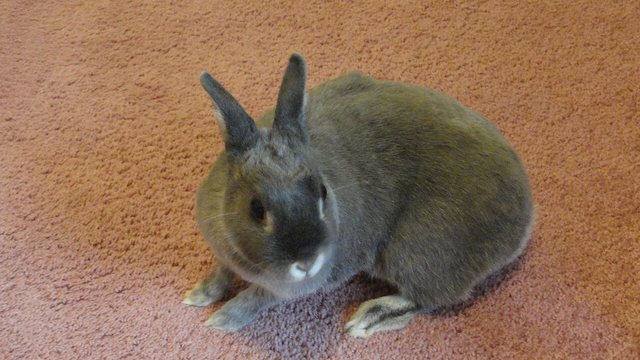
Observe their route
Look for hesitation at thresholds, sliding during turns and avoidance of open areas. Note whether one rabbit moves differently from its companion. Persistent mobility changes should be discussed with a vet, not attributed automatically to flooring.
Choose a stable surface
Use suitable non-slip flooring or securely placed washable coverings. Check backing, edges and fibres for chewing risks. Avoid small loose mats that slide when a rabbit pushes off or bunch beneath a doorway.
Connect important areas
Create dependable footing between resting places, hay, water and the exercise space. Keep the route broad enough for rabbits to pass. A single mat beneath a bowl does little if the approach remains difficult.
Maintain and review
Clean wet patches promptly and check underneath coverings for trapped moisture. Replace damaged surfaces. Reassess as rabbits age or develop health needs, using veterinary advice to adapt the environment without unnecessarily shrinking it.
Keep it practical
Your checklist
- Watch turns
- Secure floor coverings
- Connect key areas
- Check for trapped moisture
Sources & further reading
Sources offer further context; a link is not an endorsement of this publication. This guide is general information and does not replace care from a vet familiar with your animal.
See our editorial policy and commercial disclosure. Please tell us about an error.