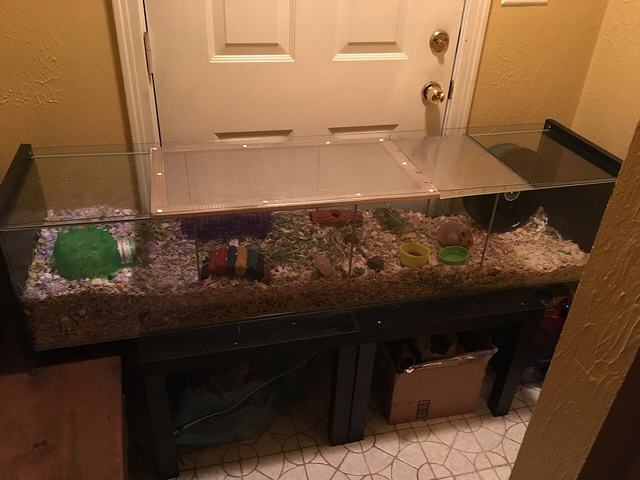
Measure the space that will actually be used
Write down the inside length and width of each enclosure you are considering. Separate the main continuous floor from shelves, connecting tubes, and decorative extensions. A complicated structure can look large while leaving little room for a wheel, burrowing area, and routes between them. Sketch those essential items at their real sizes rather than assuming everything in a display photograph will fit.
For context, Woodgreen recommends a main enclosure at least 100 by 50 centimetres for the hamster groups covered in its care guide, with height and bar-spacing requirements that vary by species. This is a welfare recommendation. Identify your hamster's species and compare the charity's current detailed advice before ordering.
Check the room before checking out
Stand in the proposed location at several times of day. Note direct sun, heating vents, drafts, speaker noise, and whether someone regularly turns on bright lights late at night. Consider where other pets wait, jump, or sleep. The habitat needs a secure position where an interested cat cannot reach the lid or tip the whole enclosure.
Also measure the route from the front door to the final stand. Include doorways and tight turns. Confirm that the stand can carry the assembled habitat and its contents using the furniture and enclosure manufacturers' information. A purchase that only fits sideways through a doorway may create problems when it eventually needs moving.
Reserve depth and support for the essentials
Choose an enclosure that allows substantial bedding without blocking ventilation or an opening. Draw the bedding level on your plan, then add the wheel at its installed height. A wheel that fits an empty enclosure may strike the lid once the burrowing area is filled. Heavy furnishings need a stable support arrangement so digging underneath does not let them settle onto the animal.
Keep routes to drinking water and food easy to locate. Include sheltered places as well as open movement space. Avoid building a maze that requires you to dismantle half the habitat to inspect a water source. Have enough spare substrate available to replace a wet area without making an unplanned shopping trip.
Practice the ordinary jobs while it is empty
Open the lid, remove the wheel, and reach the far corners. Imagine doing each task without standing on a chair or balancing the lid against your arm. Inspect seams, latches, ventilation openings, and any place bedding might interfere with closure. Photograph the assembled setup so you can return essential equipment to a familiar position after maintenance.
Set a labelled transport carrier nearby for necessary temporary moves. Store food and cleaning supplies away from the enclosure, with separate tools for each job. Finish by writing a short daily check: water functions, food is available, exits are secure, and the hamster's normal behaviour can be observed. The habitat is ready when both the animal's needs and your maintenance routine fit comfortably.
Take an empty-habitat photograph and label the normal positions of removable items. This gives another caregiver a reference after cleaning without requiring them to copy a decorative arrangement from memory. Store assembly instructions and spare manufacturer-supplied fittings together. Recheck the doors after the first full setup, because a panel that fitted when empty may behave differently once the furnishings are in place. Resolve awkward access before the hamster moves in.
Keep it practical
Your checklist
- Confirm the species and record internal dimensions.
- Draw the wheel, hides, bedding zone, and access routes to scale.
- Check the stand, room conditions, ventilation, and closures.
- Support heavy furnishings independently of loose bedding.
- Practice reaching and removing essential equipment before occupancy.
Sources & further reading
Sources offer further context; a link is not an endorsement of this publication. This guide is general information and does not replace care from a vet familiar with your animal.
See our editorial policy and commercial disclosure. Please tell us about an error.