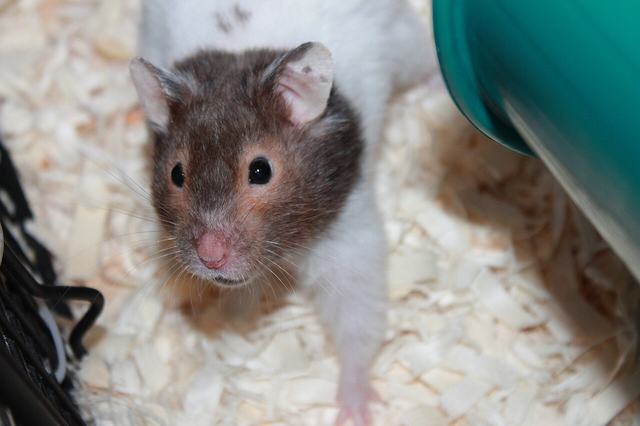
Observe before setting a timetable
For the first several evenings, note when you naturally see the hamster drinking, exploring, or using its wheel. Make observations from outside the enclosure without repeatedly opening it. A simple note such as 'out at 9:20, ate and explored' is enough. You are establishing a household baseline, not collecting a minimum number of active minutes.
Hamsters commonly sleep during the day and are active around dusk and at night. Individuals differ, and the routine may change after moving home. Leave the nest alone when the animal is sleeping. Do not lift its hide to provide a visiting child with a view, or tap the enclosure to see whether it will come out.
Make the location work for everyone
Choose a place where daytime rest will not be interrupted by frequent handling, loud speakers, or curious pets. At the same time, consider how wheel noise will affect a nearby bedroom. Moving the habitat into a corridor every night is a poor substitute for choosing a practical permanent location and addressing rattling equipment.
Keep lighting times predictable. Avoid leaving a bright lamp beside the enclosure late into the night so you can watch it. If your work schedule varies, arrange care tasks around natural opportunities rather than changing the room's day and night pattern to match every shift. Record who is responsible so repeated checks by several people do not become repeated disturbances.
Keep a shared room note if household schedules vary. It can identify when vacuuming, loud calls, or visitors are normally expected, so you can choose a suitable permanent location before those events occur. Review the arrangement after a week of ordinary use. Moving the enclosure repeatedly to solve each new noise makes a predictable household routine harder to maintain.
Separate essential checks from interaction
Water and necessary food care still need attention every day. Prepare supplies first, approach quietly, and do the essential work with as little disturbance as possible. Check the drinker's function, not simply whether its reservoir looks full. Notice damp bedding beneath it and correct a leak promptly. Leave nonessential rearranging for an appropriate maintenance session.
When the hamster is awake, an interaction can be brief. Open the enclosure calmly and offer an opportunity to approach. If it remains in a hide or moves away, finish the necessary care and let it choose another occasion. An evening that contains no handling can still be a well-managed evening for both the animal and the household.
Give children a role that fits the schedule
Children can help prepare a measured food portion, record checks, or inspect a spare accessory in daylight while an adult handles the evening care. Explain the sleeping rule before the hamster arrives. A calendar of age-appropriate jobs can reduce the temptation to wake it because a child feels they have not spent enough time with their pet.
Arrange any observation session near a time the hamster usually wakes, while accepting that it may not appear. Do not promise visitors a performance. Use drawings, habitat photographs, or a previously recorded clip to explain burrowing and foraging instead. Keep phones and flashlights away from the nest entrance.
Notice changes without assigning a diagnosis
Compare behaviour with the individual animal's pattern, not a video of someone else's hamster. Record a marked change in movement, appetite, drinking, droppings, or appearance. Contact a hamster-experienced vet if something concerns you, particularly if the animal is weak or unresponsive. Do not assume unusual stillness is ordinary sleep or wait for a new accessory to improve it.
Keep it practical
Your checklist
- Observe natural waking times without opening the nest.
- Keep the habitat in a quiet, predictable location.
- Assign daily food and water checks to a named person.
- Offer interaction only when the hamster is awake and receptive.
- Record concerning changes and contact a suitable vet.
Sources & further reading
Sources offer further context; a link is not an endorsement of this publication. This guide is general information and does not replace care from a vet familiar with your animal.
See our editorial policy and commercial disclosure. Please tell us about an error.