Begin with quiet time at floor level
Sit nearby in a secure area and let the rabbit decide whether to approach. Keep movements slow and hands visible. Avoid blocking the route back to a shelter or leaning directly over the rabbit. If you offer food, use something already included in the feeding plan, not a stream of unfamiliar treats. End a session while the animal remains comfortable. Small, repeatable experiences give you clearer information than one long session in which the rabbit becomes increasingly eager to escape.
Separate social time from necessary care
A rabbit should not learn that every approach results in being lifted. Spend ordinary time refreshing resources or sitting nearby without pursuing contact. Plan nail care, health checks, and transport with a rabbit-experienced professional when you need instruction. PDSA notes that many rabbits dislike being picked up. Respecting that preference does not mean ignoring essential care; it means finding the least stressful workable method and having the right support instead of improvising while the rabbit struggles.
Before a necessary care session, decide who will perform the task and who, if anyone, will assist. Prepare the surface, supplies, and carrier first so nobody has to reach across or leave midway through. If the task cannot be completed calmly with the technique you were shown, pause when it is safe and ask the clinic for another demonstration or an appointment. Record the difficulty specifically, such as struggling during the approach or when a foot is touched. That description gives the professional more useful information than a general label such as difficult to handle.
Learn a supported lift in person
Ask a vet or experienced rabbit-care professional to demonstrate safe handling with the individual rabbit. The body and hindquarters need support, and rabbits must never be lifted by their ears. Keep handling close to a secure surface where practical and avoid carrying the animal through a cluttered room. A written description cannot replace a demonstration if you are unsure of your grip. Prepare the destination first so you do not have to open doors, move equipment, or search for a towel while holding the rabbit.
Give children a different role
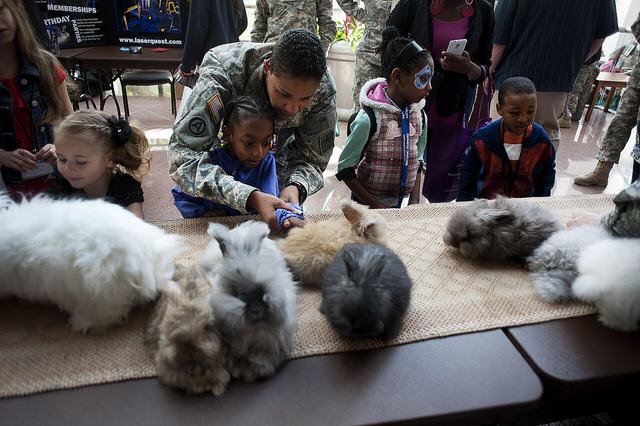
Children can help prepare hay, observe behaviour, or sit calmly under adult supervision. An adult should manage lifting rather than asking a child to catch a rabbit for play. Explain how to recognize that the rabbit has moved away and allow that choice. Set simple household rules: no chasing, no reaching into occupied retreats, and no passing a rabbit between people. If visitors want to interact, show them the established routine first and stop the interaction when the animal needs space.
Keep a care note for stressful situations
Write down the handling approach demonstrated by your vet, the carrier location, and any known difficulties. Keep the transport route free of obstacles and practice inviting the rabbit into an open carrier during calm periods. If a previously tolerant rabbit suddenly resists touch or moves differently, consult a vet rather than assuming it has become stubborn. Pain, fear, and environmental changes can look similar to an inexperienced observer. A clear record of when the behaviour changed helps the professional assess what happened.
Keep it practical
Your checklist
- Allow the rabbit to approach and retreat during social contact.
- Keep ordinary visits separate from collection attempts.
- Get an in-person handling demonstration when unsure.
- Support the body and hindquarters; never lift by the ears.
- Let adults manage lifting and supervise children at floor level.
- Prepare the carrier and contact the vet about sudden changes.
Sources & further reading
Sources offer further context; a link is not an endorsement of this publication. This guide is general information and does not replace care from a vet familiar with your animal.
See our editorial policy and commercial disclosure. Please tell us about an error.